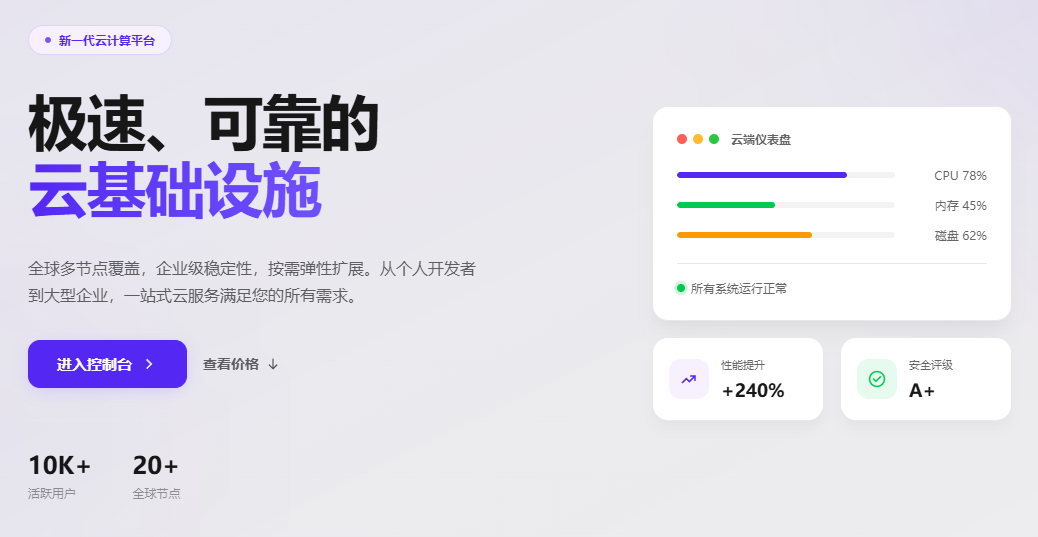
ISIF mainly sells products in Hong Kong, Singapore, Japan, and South Korea. The portfolio is broad, covering both landing nodes and China-optimized routes, and its South Korea optimized products are currently among the most aggressive offerings in this niche. Overall performance is fairly strong, though disk IO is usually capped on the low side. Community reputation is polarized: some users like the routing and pricing, while others complain about instability, frequent attacks, or route changes. The simplest summary is: the products themselves can be good, but the operator side is not always reassuring.
This review covers ISIF’s basic compute products, China-optimized compute products, and China-optimized MAX products. Security products are not included because there is no broadly accepted way to benchmark protection. Testing focused mainly on route quality and international interconnection, with logs collected during peak hours whenever possible to reflect heavier network load. IP quality and hardware performance are included only where necessary.
Points to note:
- Refund policy: ISIF only refunds orders placed within 24 hours and with under 5 GB of traffic used. Refunds go back through the original payment channel and gateway fees are not refunded. Refunds are denied for ToS violations, attacks, illegal content, traffic over 5 GB, or more than 6 cumulative refunds for the same user. See the official policy.
- ISIF has a history of being hit by network attacks. Some nodes can temporarily go offline when under attack. The outage window is usually not very long, but it still hurts user experience. If stability is critical, think carefully.
- The provider has changed routes and product specs before. A previous IP swap and repricing event doubled prices, upgraded Telecom routing, and at the same time cut bandwidth from 1000 Mbps to 200 Mbps, which hurt Unicom users badly.
- ISIF also has an unusual traffic pool design. Products in the same series can share traffic. For example, if you own one HK and one SG node in the same COM series, each with 1 TB traffic, you can leave one unused and let the other consume from the shared pool.
TL;DR
Many people buy ISIF during promotions, and pricing can vary a lot even for the same product. So this article judges the products themselves rather than raw price-to-performance.
Across the lineup, the pure landing series is mainly about international interconnection. Some nodes are genuinely friendly for Unicom or Mobile users and are fun to play with. The COP series uses high-QoS 163 plus 10099/4837 plus CMIN2. Bandwidth is limited to 200 Mbps on the lower-end plans, but route quality is good. The COM series upgrades to CN2 GIA plus 9929 plus CMIN2 and represents ISIF’s top China-optimized routing, but pricing is roughly doubled compared with COP. The CM series uses dynamic routing and is much less predictable.
Most worth checking
SG-SGP-COP: Singapore optimized route, full 200 Mbps across all three carriers, stable route quality, and decent IP quality.HK-HKG-COP: Hong Kong optimized route, very solid all-around, but the 200 Mbps cap is too restrictive.KR-GMP-COM: the flagship South Korea option. Telecom gets CN2 GIA, Unicom and Mobile get CMIN2, and media unlock is broadly good.- Pure landing series: still worth considering if your main goal is interconnection rather than China-optimized routing.
Good products, but only average value without promotions
HK-HKG-COM: excellent CN2 GIA / 9929 / CMIN2 mix, with very strong real throughput on all three carriers.SG-SGP-COM: strong for Telecom and usable for Mobile, but Unicom downlink gets stuck around 200 Mbps and IP unlock is messy.
Products to buy carefully
JP-TYO-COP: generally good, but some Chinese regions show severe route problems and upstream instability.JP-TYO-COM: Telecom is fine, but Unicom performs badly and Mobile can be heavily QoS-limited depending on region.
The mid-tier COP series is quite solid. Its only real weakness is the low 200 Mbps cap, but in practice that bandwidth is usually reachable, and for personal use it may already be enough. The higher-end COM series is more mixed, especially in Japan, where results do not fully justify the positioning.
Basic Compute
SG-SGP-A
This is a pure landing product. International interconnection is strong and the egress can saturate 2.5 Gbps. Telecom experiences serious packet loss; Unicom and Mobile both detour but can still be used directly. On IPv6, Telecom and Unicom are basically unusable, while Mobile is much happier and can sustain roughly 200 Mbps single-thread download. Overall, this node is best treated as a pure landing machine rather than a China-direct node. IP quality is good and most streaming services unlock, though MetaAI is blocked. Machine performance is also relatively strong.
|
|
JP-TYO-A
This is best understood as a landing node plus IPv6-friendly access for Unicom and Mobile. Interconnection is excellent and the 2.5 Gbps egress is real, but all three carriers ride SoftBank and fluctuate noticeably during peak hours. On IPv4, Telecom shows heavy loss, Unicom can still do around 200 Mbps, and Mobile is around 150 Mbps. On IPv6, Telecom is basically unusable, while Unicom and Mobile can reach roughly 300 Mbps. IP quality is decent, but region unlock is mixed between Japan and Lithuania, so Japanese local media results are inconsistent. CPU and IO are both on the weak side.
|
|
HK-HKG-A
This is a landing node with strong China Mobile friendliness. Interconnection is good and the node can fill the 2.5 Gbps egress, but Telecom and Unicom are close to unusable during peak hours. Mobile performs well on both IPv4 and IPv6 and can keep roughly 300 Mbps single-thread throughput. IP quality is decent, with most mainstream streaming platforms unlocked. Hardware is acceptable overall, though disk IO is still limited.
|
|
KR-GMP-A
This is a rare South Korea landing node, but it is the weakest part of the basic lineup. Bandwidth is only 200 Mbps, which is already considered relatively large for many Korea offers, yet real route quality is poor. All three carriers look better on route maps than they behave in practice, and many regions struggle to even reach 1 Mbps consistently, with packet loss and broken streams on both IPv4 and IPv6. SSH is usable, but direct-connect experience is poor. IP quality is average, Google services tend to geo-locate badly, and mainstream plus Korean local streaming is mostly unlocked. Machine performance is good, but disk IO is again limited.
South Korea also suffers from weak international interconnection in general. Many major CDNs are not deployed locally, which means traffic often detours through Japan and adds around 60 ms extra latency. This especially hurts streaming experience and makes synthetic latency checks look better or worse than real application behavior depending on which CDN is used.
|
|
China-Optimized Compute
HK-HKG-COP
This is an optimized-route product using high-QoS 163 + 10099 + CMIN2. Bandwidth is only 200 Mbps, but the route quality is good and all three carriers can generally reach the full cap. IP quality is decent, mainstream streaming is mostly unlocked, and machine performance is strong enough for ordinary workloads. The only real complaint here is the small port size.
|
|
JP-TYO-CM
This product is unusual because it uses dynamic routing instead of a guaranteed fixed premium path. Routes can shift between 163, 4837, CMI, Lumen, and SoftBank depending on load. During off-peak hours, all three carriers can look excellent and reach roughly 300 Mbps, but the product becomes much less stable during peak hours. SSH sessions may disconnect and occasional traffic interruptions do occur. IP quality is decent and mainstream streaming is mostly unlocked, but Japanese local media support remains mixed. Hardware performance is good, while IO stays limited.
If you need consistent night-time stability, this is not the safest option. It is better suited to users who are willing to trade predictability for dynamic optimization.
|
|
JP-TYO-COP
This is the fixed optimized-route Japanese product using high-QoS 163 + 10099 + CMI. Overall, all three carriers perform well and can usually fill the 200 Mbps cap with low loss and low retransmission. The main problem is that route optimization is poor in some Chinese regions such as Ningxia, Chengdu, and Xinjiang, where upstream loss and broken streams are severe. Outside those edge cases, the node is much more convincing than the CM product. IP quality is good, mainstream streaming is broadly unlocked, but Japanese local unlock remains incomplete. Hardware is solid and IO is limited.
|
|
SG-SGP-COP
This is one of the better-balanced products in the whole ISIF lineup. It uses high-QoS 163 + 10099/4837 + CMIN2, and all three carriers can usually reach the full 200 Mbps. Route quality is stable, IP quality is good, and mainstream streaming unlock is mostly fine. TikTok geo-location is oddly US-based and Google tends to route back to China, but overall the node remains very usable. Hardware performance is strong enough, with the usual low-IO tradeoff.
Among the COP series, this is probably the safest overall recommendation.
|
|
China-Optimized Compute (MAX)
HK-HKG-COM
This is the Hong Kong top-tier optimized-route product using CN2 GIA / 9929 / CMIN2. All three carriers perform well. Telecom and Unicom can exceed 550 Mbps in single-thread tests, and Mobile can still reach 300 Mbps or more. IP quality is good and mainstream streaming unlock is also good. Machine performance is strong, with the familiar low-IO cap. The route quality itself is very good; the only real drawback is that the regular price is hard to justify unless you buy it during a promotion.
|
|
SG-SGP-COM
This Singapore MAX product also uses CN2 GIA / 9929 / CMIN2. Telecom is very strong at roughly 450 Mbps single-thread, Mobile typically sits around 200-300 Mbps, and Unicom upload can exceed 350 Mbps, but Unicom download tends to stall around 200 Mbps. IP quality is only average: unlock behavior is messy, YouTube often geo-locates to Hong Kong, TikTok may show as US, and the rest is a mix. Still, if your main concern is Telecom or Mobile route quality, the product remains attractive. Hardware is strong enough, though disk IO stays limited.
|
|
JP-TYO-COM
On paper, this is the Japanese flagship product with CN2 GIA / 9929 / CMIN2, but in practice it is one of the more disappointing entries. Telecom is actually very good and can approach 400 Mbps single-thread. Unicom, however, is a mess: return routing is fairly stable, but outbound loss is severe and stream interruptions occur. Mobile performance depends heavily on region. Some regions suffer strong QoS and upload instability during peak hours, while others can still push past 300 Mbps. IP unlock is also awkward, with a near 50/50 split between US and Japan signals. Hardware performance itself is fine, but the routing does not really justify the positioning.
|
|
KR-GMP-COM
This is the star of the lineup and the strongest direct-connect South Korea option in the article. Routing is somewhat mixed by region, but the general pattern is:
- Telecom outbound: CN2
- Unicom outbound: 10099
- Mobile outbound: CMIN2
- Telecom return: CN2
- Unicom return: CMIN2
- Mobile return: CMIN2
During off-peak hours, all three carriers have stable latency. Upload is only average, usually under 100 Mbps and sometimes closer to 20 Mbps in some regions, but download is excellent. Telecom can hit around 500 Mbps single-thread, while Unicom and Mobile can usually do 300-400 Mbps. During peak hours, Unicom outbound loss becomes obvious, while Telecom and Mobile remain more stable. In short, this is a download-heavy, high-end optimized Korean node. If you upload large amounts of data, think carefully before buying. If your focus is route quality, media unlock, and direct Korea access, this is easily the best ISIF Korea product.
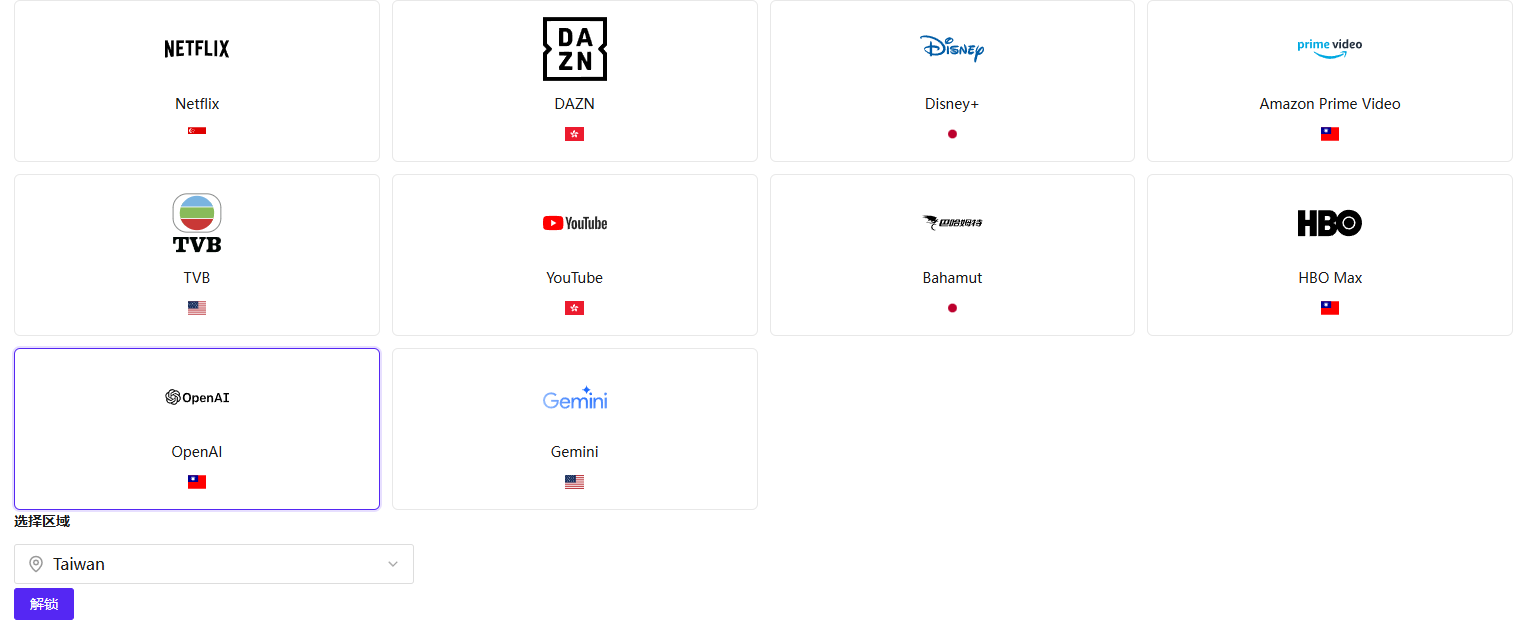
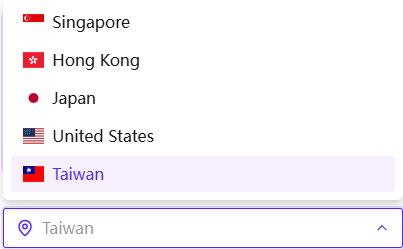
IP quality is very good, with native Korean IPs and broad unlock of Korean local streaming services. The biggest annoyance is that YouTube may geo-locate to China. ISIF also offers optional DNS unlock for some streaming services in five regions: HK, SG, JP, TW, and US.
Tested configuration:
|
|
Entry configuration:
|
|
If I had to recommend one stable Korea-route machine from this lineup, it would be this one without much hesitation. The single-thread upload speed and peak-hour Unicom outbound behavior are not perfect, but compared with other Korea-route competitors, this product is still the first one worth considering.
Most Korea routing setups are really HK -> KR style indirect use cases. For true direct-connect Korea, this one is already quite extreme.
Conclusion
ISIF is a provider with obvious strengths and obvious operational risks. The product side has real highlights, especially SG-SGP-COP, HK-HKG-COP, and KR-GMP-COM. The pure landing series is playable if your real goal is interconnection rather than domestic direct-connect. The COP series is the most balanced part of the catalog. The COM series contains both excellent nodes and some surprisingly underwhelming ones, especially in Japan.
If you care most about predictable route quality, choose the fixed-route products and avoid the dynamic-routing CM node. If you care about South Korea direct-connect quality, KR-GMP-COM is the clear centerpiece. If you want the safest all-around recommendation from the mid-tier products, SG-SGP-COP is the easiest pick.